
Published in: The Canadian Veterinary Journal, Volume 63, Issue 5, pages 521–527 · May 2022 · Peer-reviewed original research.
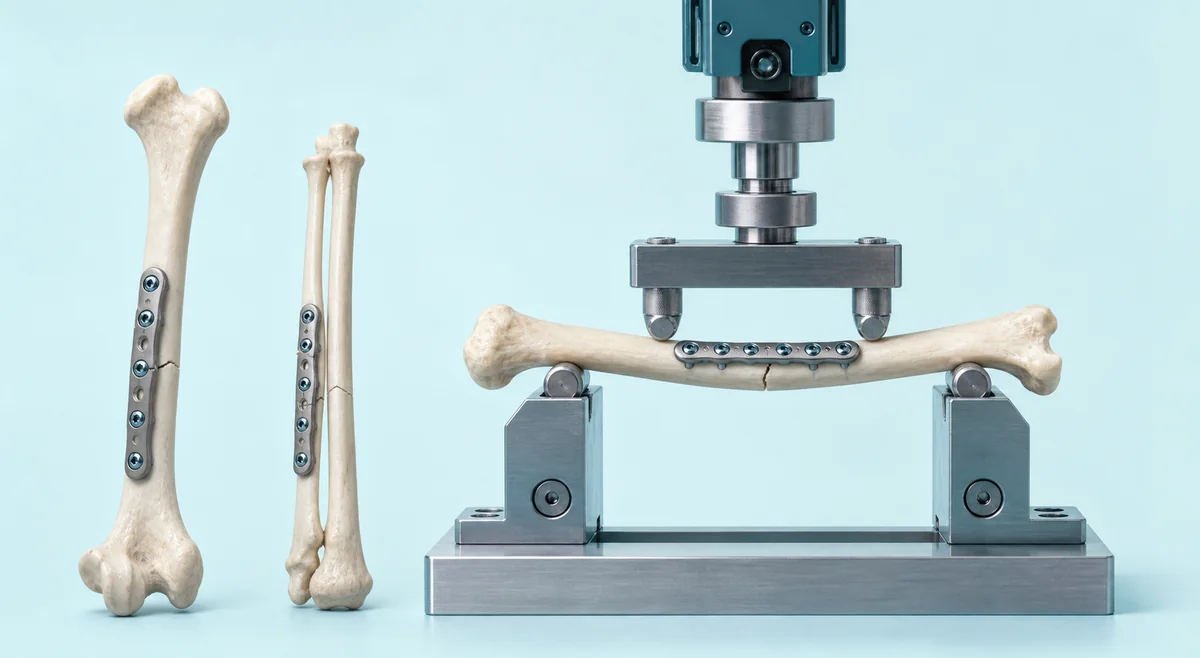
Choosing a fixation method for rabbit long-bone fractures can be challenging because the radius and humerus are small, loads vary by anatomic site and published comparative data are limited. A study from Red Bank Veterinary Hospital evaluated three fixation strategies in ex vivo rabbit radius and humerus models.
Study design
Meghan L. Davolt, Ella Davis, Brynn McCleery and Garrett Davis compared a locking plate construct, a veterinary cuttable plate construct and an external skeletal fixation construct using four-point bending. The locking plate group used a titanium OsteoCertus cuttable locking plate.
What the testing showed
- In the humerus model, the locking plate construct was the strongest of the three tested methods and most closely approximated the intact bone response.
- In the radius/ulna model, both plate constructs were stiffer than the external skeletal fixator construct.
- The radius/ulna testing did not identify a significant difference in strength between the locking plate and veterinary cuttable plate constructs.
- The results reinforce that implant performance depends on the bone, construct and loading mode; bench testing should inform—not replace—clinical judgment.
Why it matters
The work provides useful comparative mechanical data for surgeons planning rabbit fracture repair. It also illustrates how locking plate technology may contribute to construct stability in small-bone fixation, while patient-specific anatomy, soft tissues and postoperative management remain essential clinical considerations.
Citation: Davolt ML, Davis E, McCleery B, Davis G. Biomechanical analysis of 3 fixation techniques in rabbit radius and humerus bones. Canadian Veterinary Journal. 2022;63(5):521–527. PMID: 35502249.
Read the peer-reviewed article on PubMed Central.
This is an original educational summary. It does not reproduce the journal article and is not a substitute for patient-specific surgical planning.