
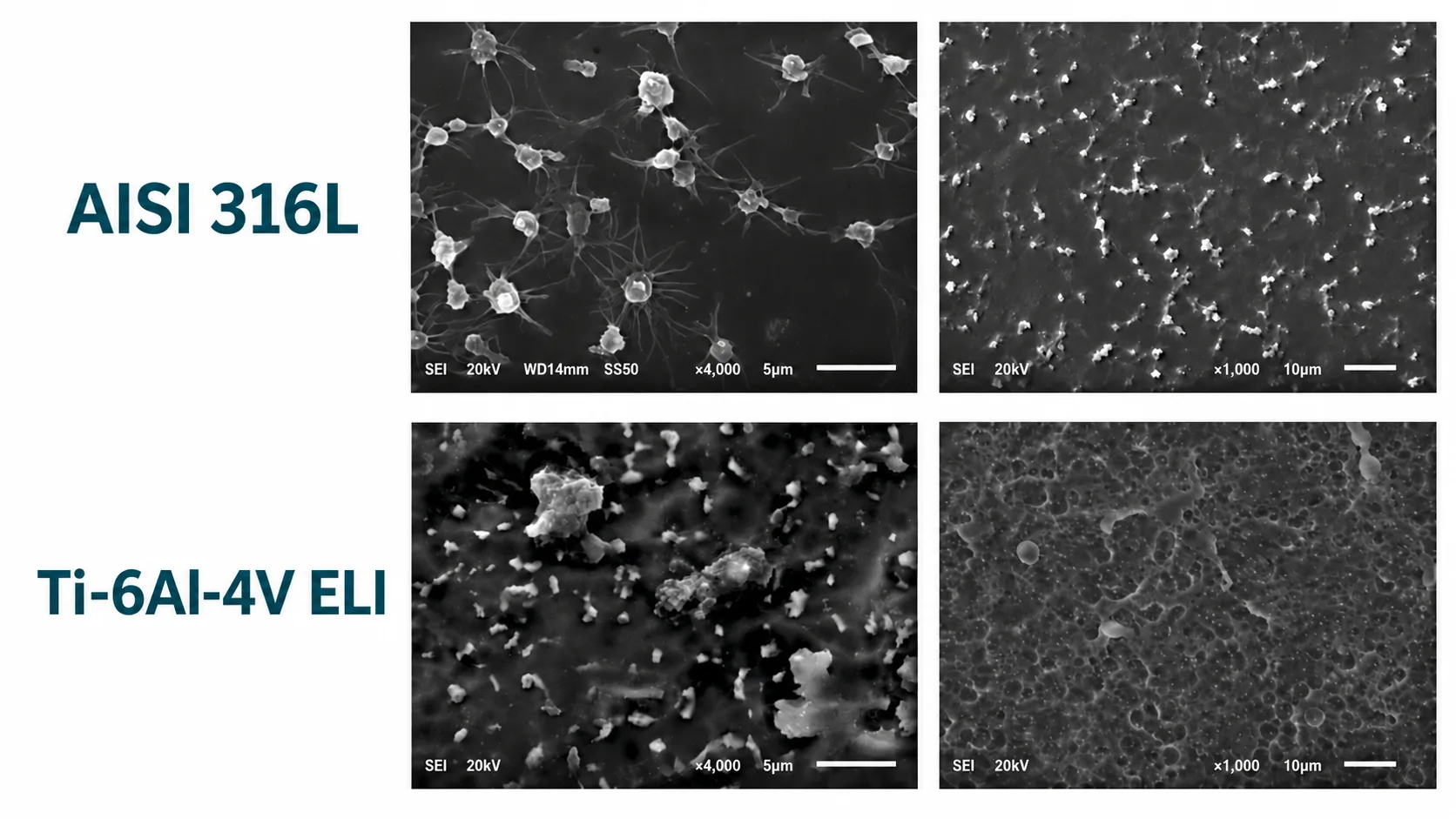
Laboratory evidence comparing Ti-6Al-4V ELI and AISI 316L: lower platelet adhesion and greater resistance to E. coli colonization under the conditions tested.
Ti-6Al-4V ELI vs. 316L: Biocompatibility Evidence
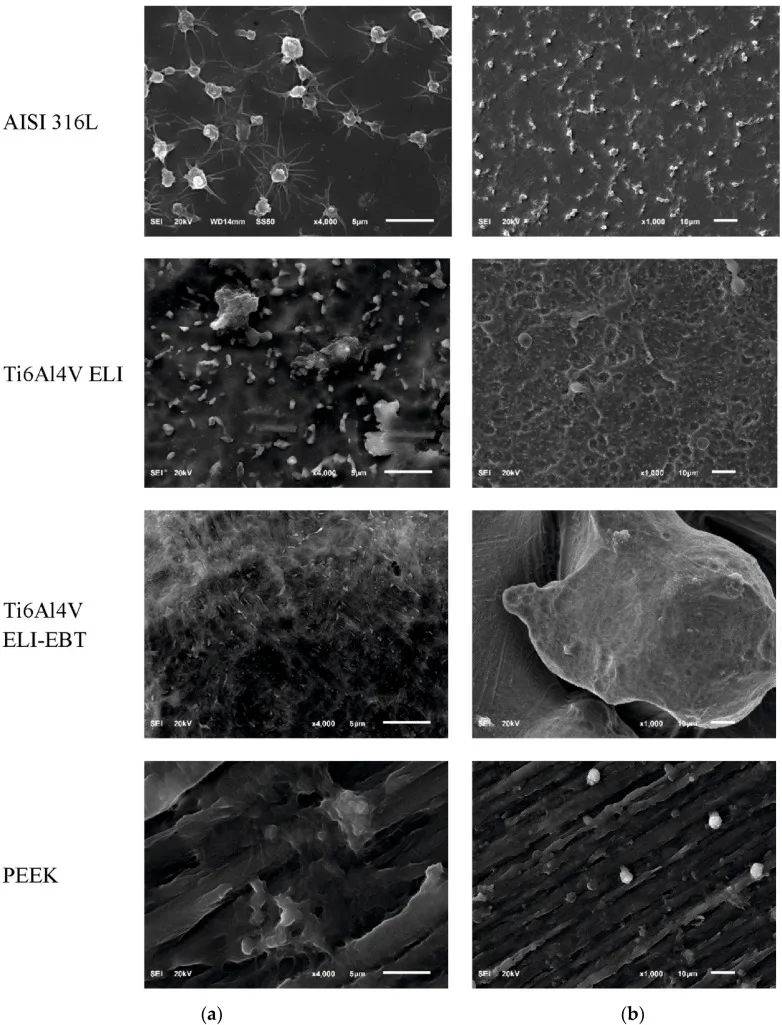
In a direct laboratory comparison, Ti-6Al-4V ELI showed lower platelet adhesion and greater resistance to E. coli surface colonization than polished AISI 316L under the conditions tested.
Blood-contact surface response
The study reported much higher platelet adhesion on polished AISI 316L than on Ti-6Al-4V ELI.
Microbial colonization test
Under the study conditions, Ti-6Al-4V ELI showed significantly greater resistance to E. coli colonization than polished AISI 316L.
Cytotoxicity result
All materials tested showed acceptable cytotoxicity results in the laboratory assay.
How to interpret this evidence
This was an in vitro laboratory comparison of material samples. It did not evaluate OsteoCertus products or establish patient-specific clinical outcomes. Material selection should follow the applicable product labeling, surgical technique and professional judgment.
Source figure and evidence: Komorowski P, et al. Comprehensive Biological Evaluation of Biomaterials Used in Spinal and Orthopedic Surgery. Materials. 2020;13(21):4769. DOI: 10.3390/ma13214769. Figure 3 is reproduced under CC BY 4.0.