
Published in: Journal of the American Academy of Orthopaedic Surgeons (JAAOS), Volume 24, Issue 10, pages 711–719 · October 2016 · Review article.
Fracture fixation is not simply a choice between a “strong” and a “weak” construct. The goal is to create enough stability to control the fracture while preserving the small, controlled motion that supports callus formation during secondary bone healing.
Why construct stiffness matters
An overly rigid bridge construct may limit beneficial interfragmentary motion and contribute to asymmetric callus formation. A construct that is too flexible can permit excessive strain, delayed healing, malalignment or fatigue failure. Stress modulation is the deliberate adjustment of implant and technique variables to stay between those extremes.
Variables the surgeon can control
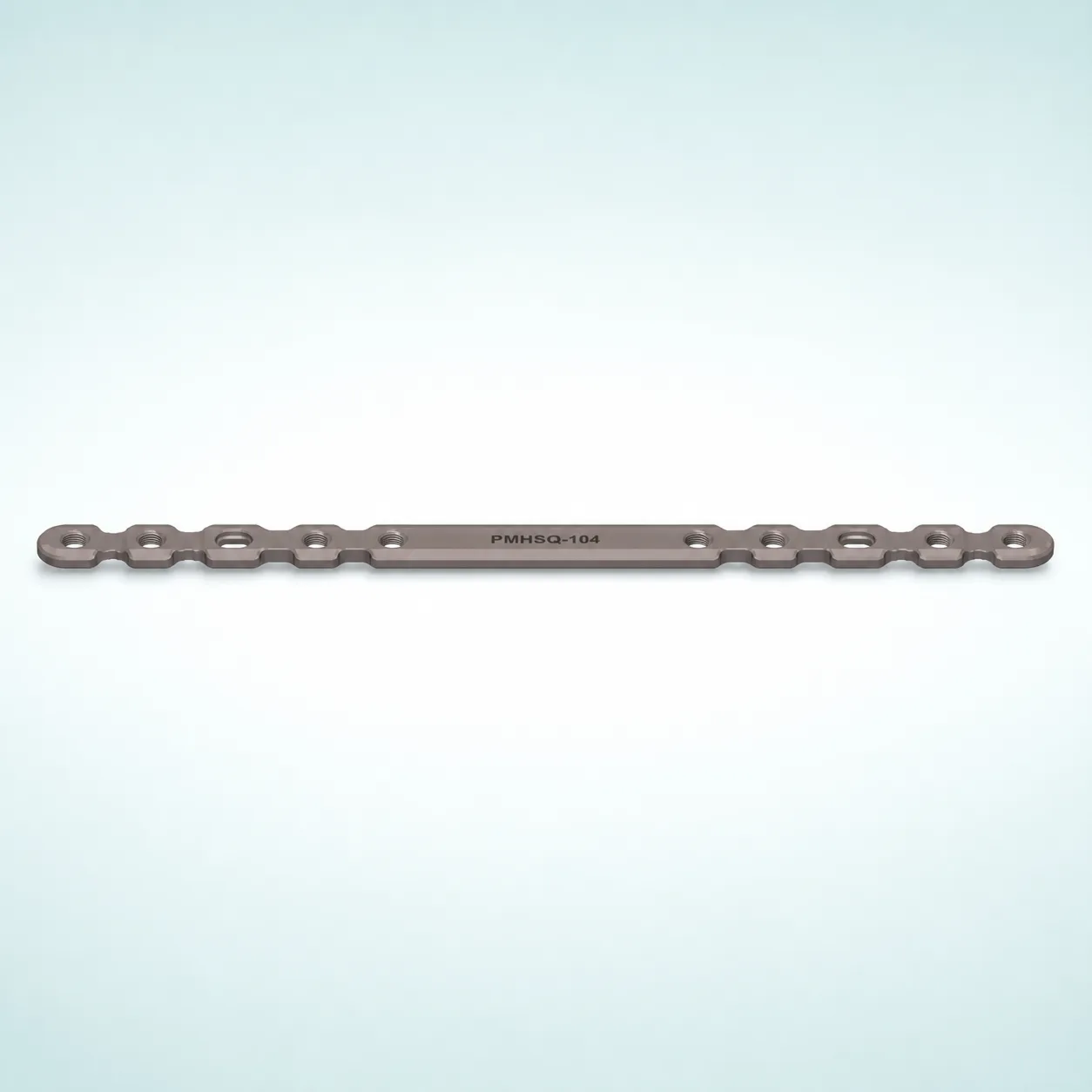
- Plate span and working length: longer plates and thoughtful screw spacing can distribute load more gradually.
- Screw density: filling every available hole is not always the most biologically favorable strategy in bridge plating.
- Material and geometry: titanium is less stiff than stainless steel, but plate thickness, shape and hole design also strongly affect the final construct.
- Locking strategy: locking, nonlocking and hybrid configurations transfer load differently and should be selected for the fracture pattern and bone quality.
Relevance for veterinary orthopedic surgery
The review was written for human orthopedics, but its biomechanical framework is useful when planning veterinary fracture fixation. Patient size, activity, fracture biology, bone quality and postoperative management must all be considered; material choice alone does not determine clinical success.
Clinical context: This educational summary does not replace case-specific surgical judgment or manufacturer instructions.
Read the source
Beltran MJ, Collinge CA, Gardner MJ. “Stress Modulation of Fracture Fixation Implants.” J Am Acad Orthop Surg. 2016;24(10):711–719. DOI: 10.5435/JAAOS-D-15-00175.