
Tandem Fatigue Tester
Developed by OsteoCertus
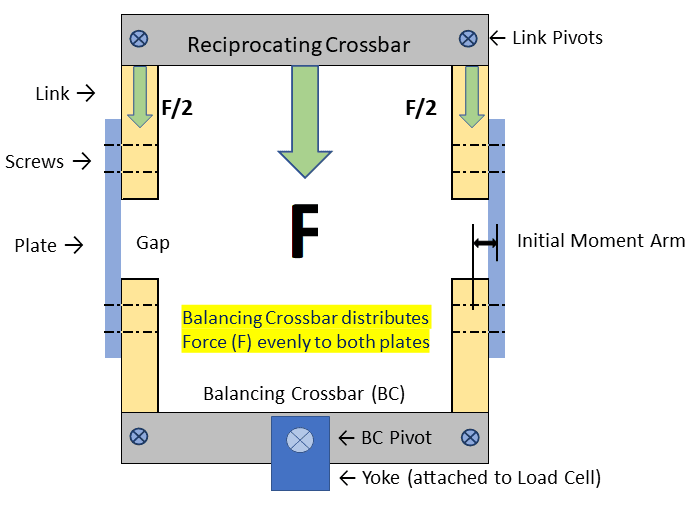
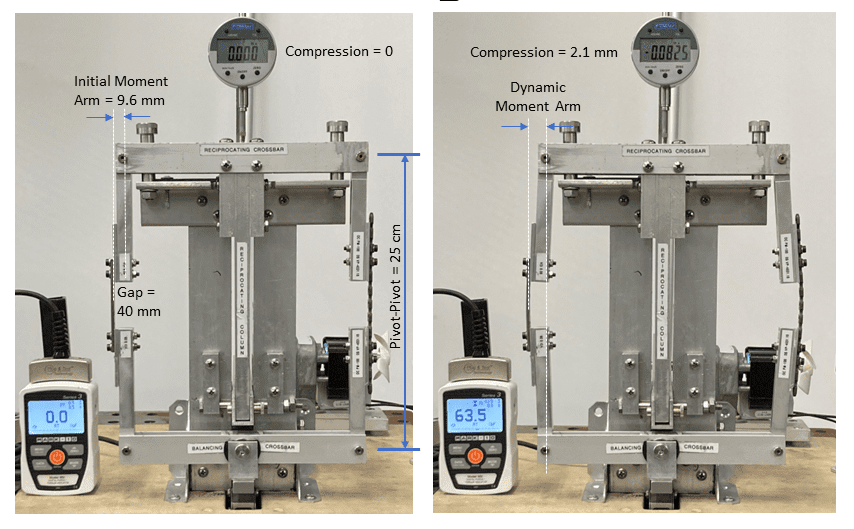
The Tandem Fatigue Test was designed to compare the performance in flexibility and resistance between two plates, simulating the Gap of a bone fracture and the force exerted by the weight of a moving animal.
Advantages
1. Loading is physiological: The tester applies an axial force, just like the limb.
2. The screws are involved: The plate can be held with the screws of the system, exposing them to shear forces.
3. Fixture-Induced failures are minimized: Failure is likely to occur at either:
(a) The Gap. Away from the Links.
(b) The weakest point of the plate-screw system near the Gap.
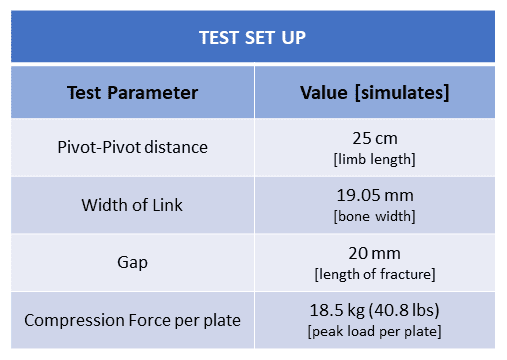
Test Parameters

Comparisons
Comparing 4-Point Bend and Eccentric Compression test results
The Eccentric Compression test produces a higher Yield Moment than the 4-Point Bend test because the compressive force counteracts the bending moment on the plate.
Nonetheless, there is a direct correlation between the two test methods.

Two Standard Plates using the Tandem Fatigue Tester

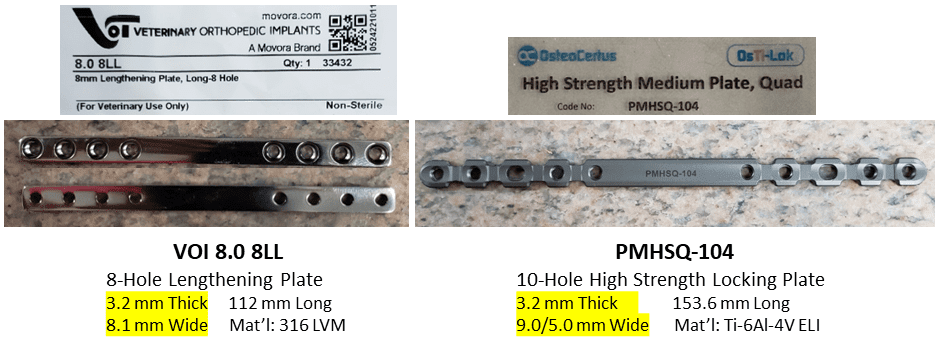
Tests Specimens

Gap

Note:
This test focuses on plate performance. Thus, system screws were not used. The plate is “protected” from breaking outside the Gap.

Two Bridge Plates using the Tandem Fatigue Tester


Tests Specimens
Detail
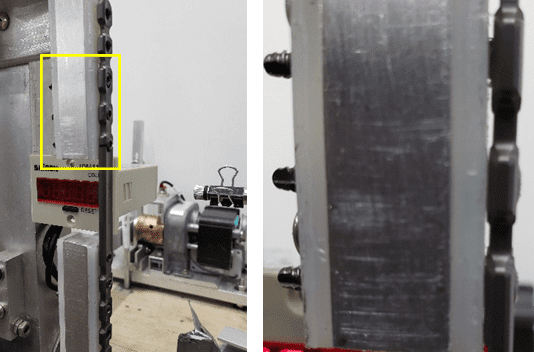
Note:
This test does involves the plate-screw construct. The system screws were threaded into 3.3 mm hard plastic to simulate the cortex.
Typical Fatigue Fractures

